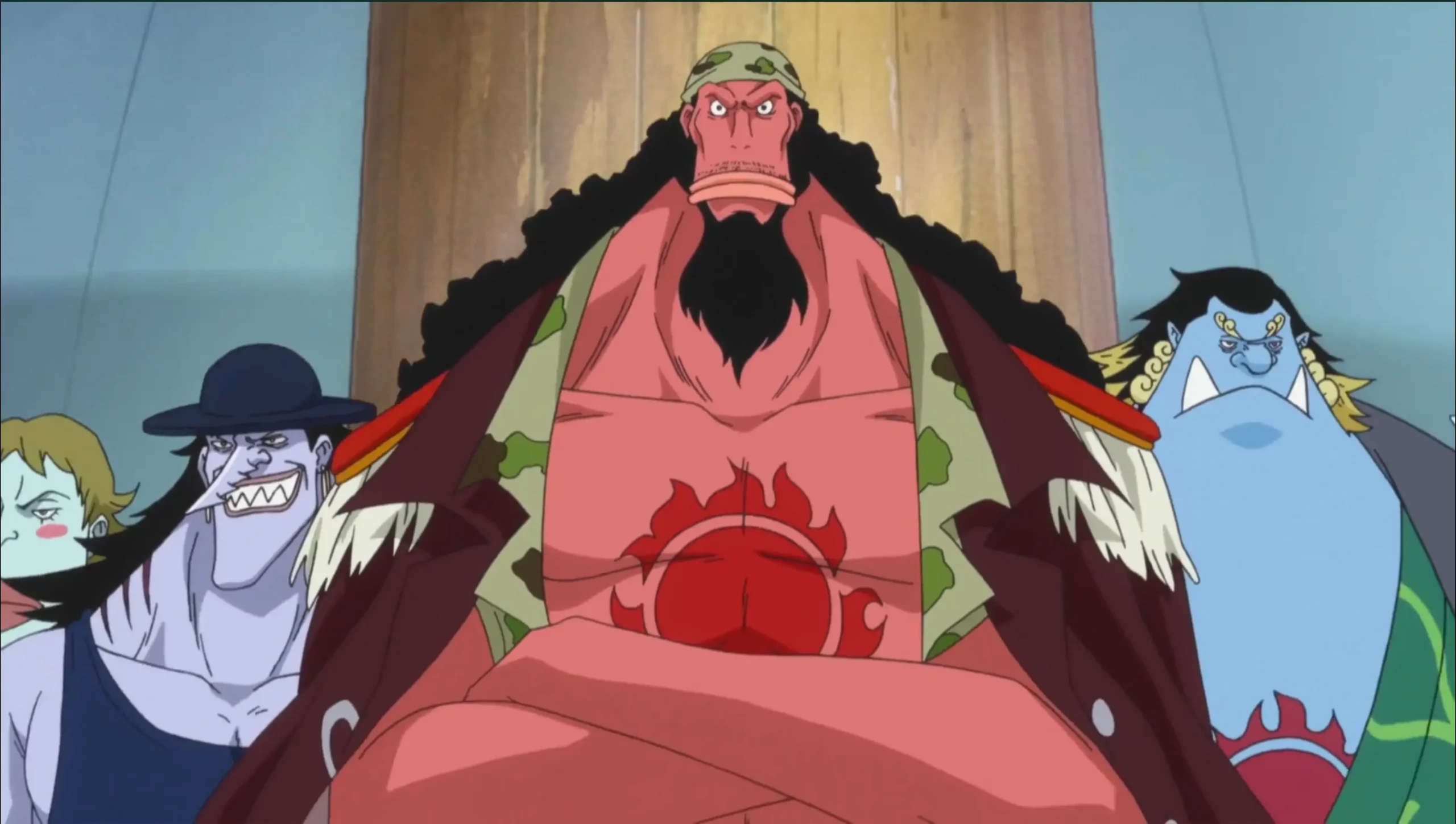
Were Fishmen Once Human? The Hidden Origin of Fishmen
Fishmen have played an important role in One Piece since Arlong Park, yet Oda has revealed almost nothing about their history or how their society began. That mystery leads to the central question behind this theory: Were Fishmen Once Human?
We know what fishmen can do. We’ve seen their incredible strength, their ability to breathe underwater, and the unique traits they can inherit from different species of marine life through their ancestry.
We also know the discrimination they have endured throughout the modern era. Humans have enslaved them, driven them away from the surface, and treated them as monsters instead of people.
But we still know almost nothing about the origin of the fishman race.
Generations of fishmen have made Fishman Island their homeland. However, a homeland is not always where a people’s history began.
The story has never shown us when the first fishmen emerged, where their earliest ancestors lived, or how they developed their aquatic characteristics. Even the surviving clues connected to the Void Century do not clearly show the fishmen we recognize today.
What if Fishman Island is not where the fishman race originated, but where their ancestors found refuge?
What if something happened during the erased century that changed those ancestors forever?
Were Fishmen Once Human before the Great Flood?
Because this Fishman Theory includes major revelations from the Egghead and Elbaph arcs, consider this your spoiler warning.
Welcome to BareAnime. If you enjoy evidence-based theories exploring One Piece’s greatest mysteries, leave a like, subscribe, and tell me what you believe happened to the ancestors of the fishman race.
To uncover their history, we need to return to the disaster that forced most of the old world beneath the ocean.
The Void Century Flood
Vegapunk’s message revealed that the islands of the modern world are only fragments of the continents that existed before the Void Century.
In Chapter 1115, he explains that the sea level rose by approximately 200 meters during the ancient war. According to Vegapunk, the change happened too quickly for natural forces to have caused it. The Ancient Weapons used during the conflict created this man-made catastrophe, swallowing civilizations and completely transforming the world’s geography.

I explored the larger implications of that discovery in my Great Kingdom–Atlantis theory, including the possibility that Fishman Island began as a sanctuary beneath the Red Line.
When the old continents sank, entire populations lost their countries, cities, and homes. Anyone who survived needed somewhere beyond the Twenty Kingdoms’ reach—and somewhere the rising ocean could not kill them.
We do not need to assume that the refugees were human or that Fishman Island already existed as a kingdom in its current form. We only need to consider whether this location could have protected survivors of the Great Flood.
Fishman Island rests approximately 10,000 meters beneath the ocean, where sunlight, breathable air, and a protective bubble allow life to flourish. Those conditions made the sanctuary inhabitable for people from the surface.

Did Humans Escape the Void Century Flood?
As the Ancient Weapons submerged the continents, refugees may have fled toward the roots of Sunlight Tree Eve. The location offered air, sunlight, protection from the ocean, and distance from the Twenty Kingdoms.
They may have expected to remain there only until Joy Boy won the war and made the surface safe again.
Instead, Joy Boy lost.
The Twenty Kingdoms established the World Government, erased the conflict from history, and gained control of the surviving world. The refugees could no longer return home because the ocean had swallowed their countries, while the same enemies still controlled the surface.
A temporary sanctuary may have become an exile lasting 800 years.
This possibility changes the meaning of the Fishman Island origin. Generations of fishmen may have been born there without their earliest ancestors originating beneath the sea.
Centuries of isolation would have changed the refugees’ culture, identity, and relationship with the surface. Their bodies may have changed as well.
Were Fishmen Survivors of a Lost Kingdom?
I believe the ancestors of fishmen belonged to a lost kingdom or special clan that existed during the Void Century.
One Piece repeatedly connects inherited identities and unusual bodies to the ancient world. Those who carry the D. remain tied to a suppressed history, the Buccaneers possess extraordinary inherited bodies, and Kuma’s family preserved the legend of Nika. Recent revelations also connect the Davy bloodline to Imu and the ancient conflict.
The ancestors of fishmen could have belonged to a similar population within the Great Kingdom.
This unknown clan may have lived alongside humans, merfolk, and Joy Boy’s other allies before the Twenty Kingdoms destroyed their civilization. After losing their homeland and place on the surface, they escaped into an underwater refuge created by their kingdom.
If merfolk already lived within the Great Kingdom, their underwater abilities and knowledge could have helped establish the safehouse, transport the refugees, and keep them alive beneath the sea.
Over the following centuries, the World Government erased the civilization they once shared while the refugees developed a new identity.
If the answer to “Were Fishmen Once Human?” is yes, their persecution carries an even darker meaning.
Humanity may have spent centuries enslaving and dehumanizing people whose ancestors were once no different from them.
The Elbaph Mural
The Elbaph mural depicted in Chapter 1138 may show the world before the fishman transformation occurred.
Among the beings portrayed in its ancient conflicts, one enormous crowned figure appears to possess the body of a mermaid and carry a trident. Her crown, size, and aquatic appearance suggest that she may represent a Mermaid Princess who possessed Poseidon’s power during one of the eras shown.

Her crown may reveal more than her identity as Poseidon. It could indicate that merfolk occupied a position of political and military authority within the Great Kingdom, possibly forming its dominant naval and military class.
Their ability to travel freely through the ocean would have made them essential to transportation, defense, and warfare. Other races could dominate the land, but merfolk controlled the seas surrounding the kingdom.
At the center of that power may have stood the Mermaid Princess. As Poseidon, she could command the Sea Kings and function as the Great Kingdom’s ultimate weapon beneath the ocean.
This ancient hierarchy may survive through Fishman Island’s modern society. The Ryugu royal family could descend from the merfolk who held authority within the Great Kingdom, while fishmen descend from the unknown population they helped transport and protect.
That would explain why merfolk retain political authority even though the shared civilization eventually became known as Fishman Island.
An enormous fish also appears beside the crowned mermaid, possibly representing a Sea King or another aquatic being connected to Poseidon.

Where Are the Fishmen on the Elbaph Mural?
The mural contains no unmistakable fishmen.
None of its visible figures clearly combines human and aquatic characteristics throughout the body in the same way as modern fishmen.
That absence does not prove fishmen were nonexistent during the Void Century. The mural may not depict every race, one of its less recognizable figures could represent them, or fishmen may have existed without participating in the events shown.
Still, Oda appears to have included a recognizable mermaid while leaving the presence of fishmen uncertain.
Their physical differences make that contrast important. Merfolk possess predominantly human upper bodies and fishlike lower bodies, while fishmen display a mix of human and aquatic characteristics throughout their bodies.
The mural may therefore preserve two stages in the history of Fishman Island’s inhabitants: merfolk may have already possessed their modern characteristics during the Great Kingdom’s era, while the unknown clan still appeared human.
If so, fishmen did not begin as another name for merfolk. They emerged as a separate population after their ancestors escaped beneath the sea.
Why Would Fishman Island Need an Air-Filled Society?
The Fishman Island bubble may reveal the refuge’s original purpose.
Fishmen and merfolk can breathe underwater. Yet their central civilization exists inside an enormous bubble containing an atmosphere suitable for humans and other surface races.
Modern fishmen benefit from this environment, but that does not explain why anyone created it. If the island was designed only for aquatic people, an air-filled society would not have been necessary.
Sunlight Tree Eve may provide the answer.
Could Sunlight Tree Eve Have Created the Bubble?
Sunlight Tree Eve transmits sunlight from the surface through its roots, illuminating Fishman Island approximately 10,000 meters beneath the ocean. King Neptune also explains in Chapter 612 that the roots supply air through respiration.
The tree’s connection to the bubble-producing Yarukiman Mangroves may explain how Fishman Island’s protective coating formed.
Chapter 496 establishes that the Yarukiman Mangroves produce a natural resin capable of creating durable bubbles that hold air. People use those bubbles for buildings, transportation, and coating ships for underwater travel.
Chapter 612 later connects Sunlight Tree Eve to those mangroves when Usopp compares Eve to their “boss.”


The manga has not confirmed that Sunlight Tree Eve created Fishman Island’s bubble. However, Eve may share the Yarukiman Mangroves’ resin-producing properties on a much greater scale.
If so, the Great Kingdom could have used Eve to create an underwater sanctuary with the sunlight, air, and protection surface races needed to survive.
The bubble may not have originally existed for fishmen and merfolk. It may have protected refugees who still possessed human bodies.
Keeping those people alive beneath the sea solved only half the problem. They eventually needed a way back to the surface.
That may explain Noah.
Why Would Fishmen and Merfolk Need Noah?
Noah creates the same contradiction as the Fishman Island bubble.
Why would aquatic people need one of the largest ships in the world?
Fishmen can breathe and travel underwater, while mermaids are described as the fastest swimmers in the world. Poseidon can also command the Sea Kings, which prove powerful enough to move Noah when they prevent it from crashing into Fishman Island.
The ship makes more sense if its passengers could not survive the journey independently.
Noah may have been built to return the human refugees to the surface after Joy Boy defeated the Twenty Kingdoms. The Mermaid Princess could command the Sea Kings to pull the vessel while Noah carried the population protected by the bubble.

Joy Boy’s defeat prevented that plan from succeeding. Noah remained beside Fishman Island, waiting for the promised time as the sanctuary became a permanent home.
The bubble kept the refugees alive beneath the ocean; Noah would return them to the surface.
Both may have served a population that still depended on human living conditions.
Were Fishmen Once Human?
The air-filled bubble and Noah suggest that the refuge may have originally protected people from the surface.
If those refugees belonged to the survivors of the Great Kingdom, we may already have the basic answer to the human origin of fishmen.
They did not begin on Fishman Island.
They escaped there.
What remains unexplained is how their descendants developed gills, extraordinary strength, amphibious bodies, and traits connected to different species of marine life.
The transformation probably occurred across many generations. Life beneath the sea would have favored people who could breathe underwater, withstand extreme depths, and move efficiently through the ocean.
However, environmental adaptation alone does not explain the fishman race’s biological variety.
Modern fishmen possess characteristics associated with sharks, rays, octopuses, eels, pufferfish, and many other forms of marine life. Some have additional arms, powerful jaws, unusual skin, natural weapons, or abilities connected to a particular aquatic species.
A single underwater environment would not easily produce such different traits.
Merfolk ancestry may provide part of the answer.
Did Fishmen Develop Through Merfolk Ancestry?
As the refugees and merfolk lived together, members of the unknown clan may have formed families with mermaids and mermen. Their descendants could have inherited combinations of human and aquatic characteristics that became more pronounced over time.
One Piece establishes that fishmen and merfolk share an unusual inheritance system. Children can express traits that do not visibly match either parent because characteristics from distant ancestors may reappear in later generations.

This could explain why families on Fishman Island produce descendants connected to many different aquatic species.
The unknown clan may have entered the refuge with human bodies before acquiring marine traits through generations of families formed with merfolk. Environmental pressure could then have favored descendants who survived more easily outside the bubble.
Over time, those traits may have spread through the population until the unknown clan developed into the fishman race.
This would explain why fishmen and merfolk share a homeland while remaining physically distinct. Merfolk preserved the body type they already possessed, while the unknown clan developed a different combination of human and aquatic characteristics.
Their shared inheritance also creates a competing explanation: both populations may descend from the same ancient ancestry and could have existed before the Void Century.
Canon has not revealed when either population first appeared. Their genetics provide a possible transformation mechanism, but they do not prove that merfolk existed first or that fishmen developed through interbreeding.
Environmental adaptation and merfolk ancestry may therefore explain part of the fishman transformation.
Another possibility leads back to the Ancient Weapons.
Did an Ancient Weapon Change the Refugees?
Fishman Island rests directly beneath Marijoa, where Imu and the World Government control—or can access—the power capable of recreating the Void Century catastrophe.
That location raises a darker possibility.
What if an Ancient Weapon—or another source of ancient energy connected to it—affected the refugees living beneath the Holy Land?
If the weapon remained near Marijoa and released an unknown form of energy into the ocean, centuries of exposure could have contributed to the population’s changing bodies. This would function like a type of “fallout” from the war that destroyed their civilization.
The series has never confirmed that an Ancient Weapon releases radiation or causes biological mutations. It has not revealed the physical location of the weapon used against Lulusia or officially identified it as Uranus, Pluton, or Poseidon.
This remains the most speculative transformation mechanism in the Fishman Theory.
What the Mother Flame Actually Confirms
The Mother Flame does not confirm biological mutation.
Vegapunk created the Mother Flame on Egghead, where the main flame and its massive fusion reactor remained inside the Power Plant. York stole only a fragment and supplied it to the Five Elders.
The World Government used that fragment to power the weapon that erased Lulusia.


Nothing establishes that the Mother Flame mutates living beings, but its ability to activate surviving technology from the Void Century raises the possibility that other forms of ancient energy could affect living bodies in ways Vegapunk has not yet explained.
The reactor imagery and the Mother Flame’s ability to power a weapon with worldwide consequences also create a thematic comparison to nuclear energy and its fallout.
Oda may be using that symbolism right before our eyes.
Although there is no solid proof, an unknown power from the Void Century could have contributed to the fishman race’s transformation.
Joy Boy’s Apology
Chapter 649 establishes that Joy Boy made a promise involving the Mermaid Princess who possessed Poseidon’s power during the Void Century. After failing to fulfill his part, he left an apology on a Poneglyph.

The exact promise remains unknown.
If Joy Boy planned to use Noah to return the refugees to the surface, his defeat left them trapped in the environment that may have transformed their descendants.
His apology could therefore represent more than his failure to move a ship. He may have failed to protect an entire population from permanent exile and the loss of its original identity.
Someone in the future may inherit the responsibility he could not fulfill: complete the promise, bring Fishman Island’s inhabitants beneath the real sun, and free them from the consequences of the Void Century.
Why Would Luffy Destroy Fishman Island?
Madam Shyarly’s prediction may reveal how Joy Boy’s promise will finally be completed.
In Chapter 610, she predicts that Luffy will destroy Fishman Island.Her vision does not explain why the destruction occurs or what happens to its inhabitants.

If Fishman Island began as a temporary refuge, its destruction would not necessarily represent a tragedy. It could mark the moment when its people no longer need to remain hidden beneath the sea.
The sanctuary protected the refugees from the Twenty Kingdoms, but Joy Boy’s defeat transformed it into an underwater prison. Their descendants have spent the following 800 years living directly beneath Marijoa, separated from the surface and the real sun.
Noah may have been preserved for the moment that prison finally opens.
Before Luffy destroys Fishman Island—or the part of the Red Line and Marijoa that keeps it trapped below—the Mermaid Princess could command the Sea Kings to move Noah. The ship would carry the island’s population to safety and complete the evacuation Joy Boy never accomplished.
Poseidon moves Noah.
Noah carries the people to the surface.
Luffy destroys the refuge that became their prison.
The inhabitants of Fishman Island finally live beneath the real sun, fulfilling the dream Queen Otohime pursued centuries later.
Luffy may not destroy Fishman Island because he is its enemy. He may destroy it because its people are finally free.
The promise may never have been to preserve Fishman Island, but to create a world where it was no longer necessary.
The Celestial Dragons May Not Know the Truth
If the answer to “Were Fishmen Once Human?” is yes, most of the World Government may have lost—or never possessed—the truth about their identity.
The Celestial Dragons treat fishmen and merfolk as species beneath humanity. Enslavers value mermaids for their appearance and rarity, while humans often fear fishmen because of their aquatic features and superior physical strength.
Imu and the Five Elders possess knowledge of the ancient conflict that the rest of the world lacks. However, the manga has not revealed whether even they know how the fishman race originated.
Most Celestial Dragons appear largely ignorant of the Void Century. They inherited their ancestors’ status and prejudices without necessarily understanding the history behind them.
After 800 years of biological and cultural change, the descendants of the Twenty Kingdoms may no longer recognize the refugees their ancestors forced beneath the sea. Even the government’s highest authorities may know the crimes that created the modern world without understanding what became of those survivors.
That possibility would expose the artificial nature of the Celestial Dragons’ superiority.
Fishmen would not be monsters separated from humanity by nature. They would be survivors whom history taught humanity to reject.


Fishmen and Merfolk Differences
Fishmen and merfolk share Fishman Island, but they remain physically distinct.
Merfolk generally possess humanlike upper bodies and fishlike lower bodies. Fishmen display aquatic characteristics throughout their bodies while retaining arms and legs that allow them to move naturally on land.
Both groups can breathe underwater, but they interact with land differently.


Fishmen retain their aquatic forms on the surface, while a mermaid’s tail divides into legs at the age of 30. Younger mermaids require assistance to move freely on land.
Their shared inheritance system allows traits from distant ancestors to reappear in either population. This could support different biological paths, but it could also mean that fishmen and merfolk descend from the same ancient ancestry.
Canon has not revealed which explanation is correct.
Their social positions provide another distinction. Fishmen gave the island much of its identity, yet merfolk occupy its royal leadership.
Why Is It Called Fishman Island?
If merfolk established and ruled this undersea nation, why is it currently known as Fishman Island?
The answer may depend on when it received that name—and what its inhabitants needed to hide.
The Great Kingdom may have created the original refuge, but its survivors could not continue using the civilization’s forbidden name after Joy Boy’s defeat.
Chapter 395 establishes that the Great Kingdom’s name carries enough importance for the Five Elders to kill Professor Clover before he can reveal it. Calling the underwater refuge Atlantis, Atlantia, or whatever name the Great Kingdom once possessed would have exposed its connection to the civilization the World Government wanted erased.
The survivors needed a name that concealed their history.
As the unknown clan transformed and became known as fishmen, the sanctuary may have adopted a simple descriptive name: Fishman Island.
That name revealed who lived there without revealing where they came from. It may have even originated from the label surface humans used for people they feared and considered monstrous.
By accepting that name, the descendants of the Great Kingdom could hide their original identity behind the identity the modern world assigned to them. To the World Government, Fishman Island would appear to be an isolated underwater kingdom inhabited by a separate aquatic race rather than a refuge preserving the survivors of its greatest enemy.
The name also honors the people who transformed it into their permanent homeland. Merfolk helped create the safehouse, transport the refugees, and provide the knowledge necessary for survival, but the fishmen established and protected the lasting society that developed there.
Fishman Island may therefore serve as both a tribute and a disguise.
Evidence of a Higher Merfolk Caste
That social hierarchy remains visible in the modern kingdom.
The Ryugu Kingdom’s royal family consists entirely of merfolk. King Neptune and his sons are mermen, while Shirahoshi is the Mermaid Princess who inherited Poseidon’s power.
Merfolk also occupy some of the island’s most prosperous locations. Their communities provide better housing, food, commerce, and resources than the neglected Fish-Man District.
That district originally served as an orphanage for children from both populations. The kingdom later allowed it to deteriorate into an isolated and lawless area populated by poor and disenfranchised fishmen and merfolk.
Both races experienced poverty there, but many of its most important characters were fishmen, including Fisher Tiger, Arlong, Jinbe, Hody Jones, and members of their crews.
Canon does not establish that every merfolk lives better than every fishman. However, merfolk hold the kingdom’s highest authority and appear more closely associated with its prosperous central society, while fishmen remain more strongly associated with its marginalized population.
That supports the existence of a caste system even if the manga never formally calls it one.
Merfolk may occupy the higher caste because their ancestors possessed the underwater abilities, knowledge, and authority required to help the refugees survive. Fishmen became the population most closely identified with the sanctuary because they needed it and transformed it into their permanent home.
The Sea Beasts
The Sea Beasts near Fishman Island may provide another visual clue about the fishman race’s transformation.
When the Straw Hats approach the island, they encounter a sea rhinoceros, sea gorilla, sea elephant, sea giraffe, sea bear, and sea lion controlled by the New Fish-Man Pirates.
These creatures differ from the Sea Kings commanded by Poseidon. Each Sea Beast combines a recognizable land animal with a body adapted for life underwater.
The story has not revealed their biological history or established that they once lived on land. However, their designs show how familiar surface life can take on an aquatic form.
If Oda intended that imagery as a clue, the Sea Beasts Fishman Island connection may symbolize what happened to the unknown clan.
Fishmen could represent the human version of that same idea.

Fishmen and the One Piece Atlantis Parallel
In Plato’s account, Atlantis was an advanced island civilization that existed above the sea before earthquakes and floods destroyed it.
Later Atlantis-inspired fiction connects the sunken civilization to mermaids, mermen, and aquatic humans. Disney’s The Little Mermaid even takes place in an underwater kingdom named Atlantica.
These adaptations do not prove that Oda used the same concept. They demonstrate how naturally the Atlantis myth connects an advanced surface civilization, a catastrophic flood, and the emergence of aquatic people.
My Fishman Island Atlantis theory follows that sequence.
The Great Kingdom may have existed above the sea before the Ancient Weapons submerged the old continents. Some Great Kingdom survivors escaped into its underwater refuge, where their descendants eventually became fishmen.
What Atlantis Would Mean for Fishmen
Fishman Island would preserve more than the Great Kingdom’s history. Its population would embody the biological and cultural consequences of that civilization’s destruction.
The surface world now portrays fishmen as primitive, violent, and less civilized than humans. Yet their ancestors may have belonged to the most technologically advanced civilization in history.
The fall of Atlantis did not turn them into monsters.
History taught the world to see them that way.
The Legend of Zelda Parallel
The Zora from The Legend of Zelda provide another useful comparison.
Ocarina of Time and Breath of the Wild portray them as a noble and highly organized aquatic society. However, A Link to the Past depicts many Zora as greener, more monstrous, and openly hostile.
Page 49 of The Legend of Zelda Encyclopedia connects that transformation to Hyrule’s decline and the breakdown of the Zora’s relationship with the Hylians:
“Their bodies changed from blue to green, and they have become increasingly aggressive toward outsiders.”
The change continued throughout the Downfall Timeline. Part of the population rebelled against Queen Oren in A Link Between Worlds, and by The Adventure of Link, the hostile Zora had become outright monsters.
Environmental and Dietary Adaptation
The series also establishes that Zora depend heavily on their environments.
The Majora’s Mask instruction booklet describes the Zora of Termina as “particularly sensitive to environmental changes.”
In Oracle of Ages, Veran’s curse polluted the Zora Seas of Labrynna. The contamination made the Sea Zora sick, disrupted their society, and resulted in the Zora King’s death in the unaltered timeline.
Pollution would also contaminate or destroy the plants, fish, and other food sources within that ecosystem. As those resources disappeared, the Zora would experience a drastic change in diet.
These examples involve different populations, but they establish that corrupted water can devastate Zora health, food supplies, and society.
Environmental and dietary adaptation, magical corruption, civilizational decline, and generations of conflict provide a canonical model for how drastically an aquatic population can change across different eras.
How This Connects to Fishmen
Something similar may have happened to the people who eventually became fishmen.
The Great Kingdom’s destruction forced them into an underwater environment where they depended on unfamiliar resources. Changes to their surroundings and diet may have gradually affected their descendants, while merfolk ancestry or an unknown ancient power accelerated the transformation.
Like the Zora, the ancestors of fishmen may have belonged to a sophisticated civilization before war and environmental change transformed how their descendants looked and lived.
Oda may be hiding a major reversal within the fishmen origin.
A race the modern world considers uncivilized may have once stood at the pinnacle of civilization.
Why the Fishmen Human Origin Matters
The question “Were Fishmen Once Human?” connects the fishman race directly to the Great Kingdom, the Void Century, Joy Boy’s promise, and the World Government’s greatest crime.
Together, the clues create one possible history.
Humans, merfolk, and other clans lived within the Great Kingdom. When the Ancient Weapons raised the sea level by 200 meters, merfolk transported members of the unknown clan into an underwater safehouse.
Joy Boy intended to return them to the surface aboard Noah, but his defeat turned the refuge into a permanent home. Over the following centuries, environmental pressure, merfolk ancestry, or an unknown ancient power transformed their descendants into fishmen.
Each clue supports a different stage of that history. The Void Century flood explains why the clan fled, Fishman Island’s bubble explains how they survived, and Noah represents their planned return to the surface.
The Elbaph mural may preserve the period before their transformation by showing an apparent mermaid without any unmistakable modern fishmen. Even the Sea Beasts provide a visual example of familiar surface animals possessing aquatic forms.
Individually, none of these clues answers “Were Fishmen Once Human?” with certainty. Together, they form a coherent possible history.
Were Fishmen Once Human before the Great Flood?
I believe their ancestors were.
They may have belonged to an unknown clan within the Great Kingdom—the civilization Oda may eventually reveal as Atlantis, Atlantia, Atlantica, or another variation of that legendary name.
After losing their home, the refugees disappeared beneath the sea and gradually became the fishmen living on Fishman Island today.
If that conclusion is correct, completing Joy Boy’s promise would do more than relocate an underwater population. It would restore the Great Kingdom’s descendants to the world their enemies took from them.
Queen Otohime’s dream of living beneath the real sun may continue that desire across 800 years. Madam Shyarly’s prediction that Luffy will destroy Fishman Island could finally end the refugees’ exile and force the surface world to accept the people it spent centuries rejecting.
Fishmen would finally return home.
Until then, tell me what you think.
Were Fishmen Once Human, or does another explanation better account for their mysterious origin?
Which transformation mechanism seems most likely: environmental adaptation, merfolk ancestry, exposure to an unknown ancient power, or a combination of all three?
Comment “HUMAN” if you believe the fishman race began on the surface.
If you enjoyed this Fishman Theory, leave a like, subscribe to BareAnime, share this theory, and explore my Great Kingdom–Atlantis theory for the first half of this mystery.